

Women at The Doe Fund: Orisha
For Women’s History Month, The Doe Fund is immensely proud to celebrate women leaders who are a beacon for social justice — whose passion, commitment, and steadfast work ethic are reflected in their career and advocacy for the underserved.
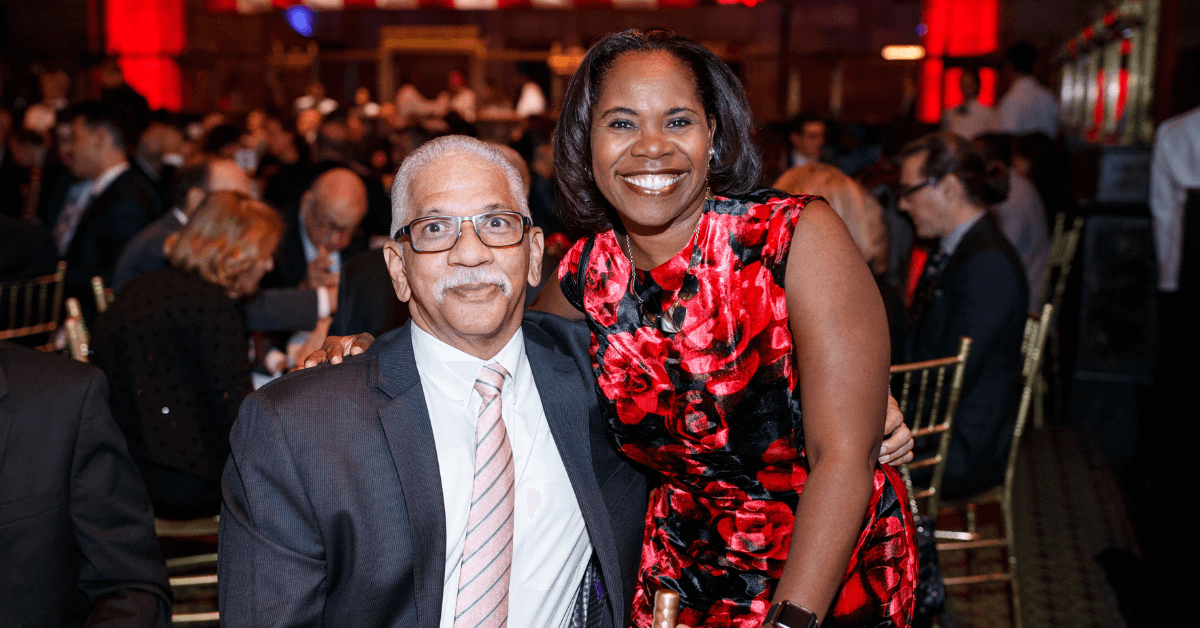
Orisha Jordan was part of The Doe Fund almost from the very beginning. The Doe Fund, in turn, was the beginning of her career. But the journey — successful and rewarding as it has been — wasn’t easy.
It all started in 1996, when Orisha became an Administrative Assistant of the Good Day Sunshine Program, a partnership between The Doe Fund and the City of New York to serve women and children. Unfortunately, the program never got off the ground. When it ended, Orisha was left without a job.

Fortunately, she was quickly reassigned thanks to her fantastic work ethic and dedication. Orisha moved to The Doe Fund’s 84th Street offices and was tasked with helping open A Better Place, The Doe Fund’s first permanent supportive housing residence, later that year.
From there, she continued as an Administrative Assistant for our Harlem Center of Opportunity, The Doe Fund’s Manhattan transitional housing facility. “I was responsible for conducting new hire orientations and completing all new hire paperwork, since there was no official Human Resources or Personnel Department back in the early days,” she told us. “My favorite experience while working at 84th Street were my daily talks with [Ready, Willing & Able Co-Founder and The Doe Fund President Emeritus] Harriet Karr-McDonald. She has always been one of my biggest advocates.”
Orisha soon became the Executive Assistant at Harlem before being promoted to its Director of Aftercare — now known as Graduate Services — from 2000-2004. Soon after that, she was promoted to Director of Social and Graduate Services for Harlem. In 2015, she settled into her current role: Associate Facility Director at the Peter Jay Sharp Center for Opportunity, our 400-bed transitional residence on Porter Avenue in Brooklyn.
“A typical day on the job is nonstop from the moment I walk in the door,” Orisha said. “The workday ranges from problem-solving to crisis intervention, teaching, mentoring, implementing, and ensuring all program and Department of Homeless Services policies and procedures are followed correctly. What we do and the population we serve is very challenging. Therefore, ensuring staff feel supported and valued is very important to me.”
Her father’s advice helped her navigate the challenges she faced as a woman in an organization providing men with supportive services. “My father was a very strong, powerful role model. He always listened to me, pushed me to want more for myself, and taught me to stand up for myself, be independent, patient, caring, supportive, a coach, and a mentor. He taught me to never allow anyone to intimidate me and to always respect everyone,” Orisha said. “It is because of my close relationship with my father and what he taught me that keeps me going every day. He also taught me not to allow anyone to treat or speak to me however they want — which is sometimes a challenge working with men.”
She continued, “My voice was overlooked in a room full of men on occasions. However, those challenges have afforded me the opportunity to speak louder, work harder, and fight harder to be seen, heard, and to show what I’m made of. I’ve also been very fortunate to have a supervisor who has supported me, believed in me, and valued my thoughts and suggestions. His support has been very important and beneficial.”
When describing the most significant parts of her work, Orisha identified the following: “Leading change and making a difference in the organization and in the lives of others. Working in an all-male environment, I did not have a lot of women on the job; therefore, I felt and still feel it is part of my responsibility to mentor those who have come after me, especially women of color.”
She continued, “I’m driven by my passion for helping others and for the mission of The Doe Fund. I’m also driven by the importance of providing men of color an opportunity for a second chance to change their lives for the better and become productive members of their community, to give back to their communities, and be there for their families.”

When it comes to advice for other female professionals and aspiring leaders, Orisha has much to bestow: “Have a passion for what you do. Always stay positive and believe in your self-worth. Understand, embrace the mission, and work toward it to make a difference in the lives of others. Believe in your skills, and learn by observing and listening. Look for role models and mentors. Take advantage of all training opportunities. Spend time understanding the full scope of the organization because all parts are interrelated. Understand management and how to plan and make use of data for planning and making decisions. Be a good listener, and never feel entitled or superior to others. Above all, be supportive of each other and not compete with each other. Maintain your self-respect and your dignity, and never allow anyone to intimidate you.”