

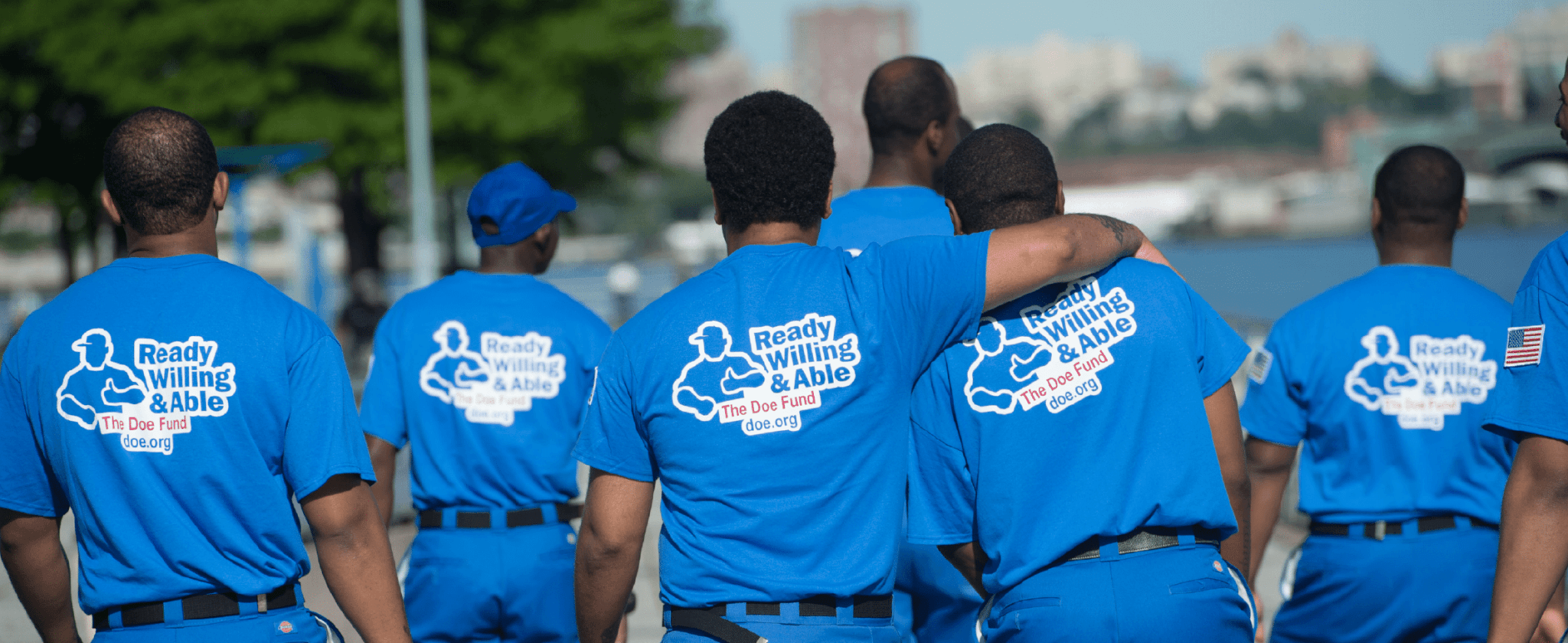
Ready, Willing & Able provides paid transitional work training, transitional housing, workforce development, and comprehensive supportive services. The program has connected over 15,000 people experiencing homelessness to jobs, housing, or both.
Ready, Willing & Able trainees develop essential workplace skills like accountability, communication, problem-solving, teamwork, and time management while providing supplemental sanitation across 115 miles of city streets weekly. These assignments include bagging over 3,300 tons of trash per year to power washing and graffiti removal, tree bed watering, painting street furniture, and snow removal.
The skills trainees learn are further developed in career essentials and occupational training courses for fields including CDL, construction, culinary arts, HVAC, and security. Trainees have access to personalized case management; job and housing placement specialists; addiction recovery support; classes including adult basic education, high school equivalency, computer essentials, and financial literacy; legal referral services; and more. Once someone graduates the program by obtaining employment and housing, we even offer continuing, lifetime support — which is why we say, “Doe Fund for Life!”
Ready, Willing & Able doubles the chances of obtaining employment, and according to an independent study by the New York State Division of Criminal Justice Services, it reduces the chance of recidivism by more than half.

Phase 1
Employment Preparation
Months 2–3
Complete*
Orientation
Months 1
Complete*
Phase 2
Transitional Employment
Months 4–8.5
Legal Services
Phase 3
Job & Housing Search
Months 8.5+
Secure JOBS*
Secure Housing*
Graduate Services
* Required to progress to next phase.