

Guest Post: Fixing a Broken Parole System
Alexander Horwitz is Executive Director of New Yorkers United for Justice, a bipartisan coalition of local and national organizations working together to deliver common sense criminal justice reforms to New York State.
New York’s parole system is broken. It sends people back to prison at a blistering rate, usually with no benefit to public safety. And it’s incredibly expensive: New York taxpayers spend about $680 million each year just to incarcerate people for technical violations—for breaking administrative rules, not for committing new crimes. In fact, technical violations account for about 80% of the trips back to jail and prison that people on parole make, and about 33% of all prison admissions, statewide.
But the real cost of this broken and biased system can’t be measured in dollars. When a person is lucky enough to be granted parole, the rules and restrictions that come with it set that person up to fail. Missing an appointment with your parole officer, living in the wrong apartment building, being friends with the wrong people… any of it is enough to send you back to jail or prison. You’re on your own to find a job and housing, to reconnect with your family, to try to stabilize your life. That’s hard enough with a criminal record. But the onerous, often arbitrary rules imposed by parole make it next to impossible.
Parole’s inherent unfairness is also explicitly unequal. Black New Yorkers are seven times as likely to be on supervision than whites. They’re twelve times as likely to be detained on suspicion of a technical violation. And they’re six times as likely to be returned to prison after violating parole. Even who gets parole in the first place shows stark racial bias: if you’re under 25 and up for parole, you’re twice as likely to get it if you’re white than if you’re a Black man.
The real cost of New York’s parole system is human life: wasted potential, broken families, and communities in crisis.
Ironically, parole was invented in New York State. The first-in-the-nation parole system was originally devised as a state-sponsored system of reentry that would safely and permanently bring people home from an overcrowded prison system. Instead, it has devolved into a recidivism machine.
Changing it will require legislative action at the state level and, likely, years of work, resource reallocation, retraining, and careful progress once the laws change to permanently transform this broken system. That’s why there’s no time to lose for organizations like New Yorkers United for Justice and our colleagues at research institutions and community organizations throughout the state that work every day for meaningful legislative change.
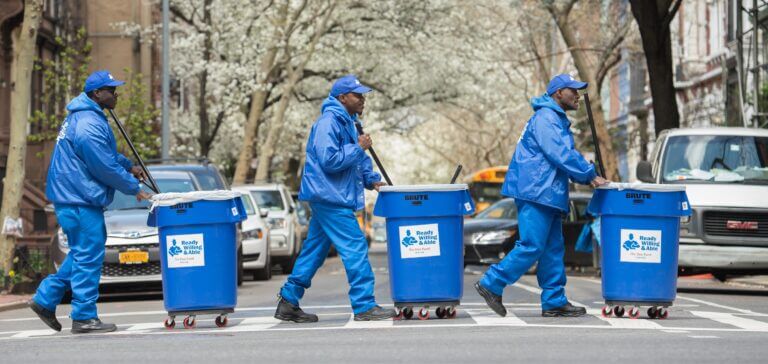
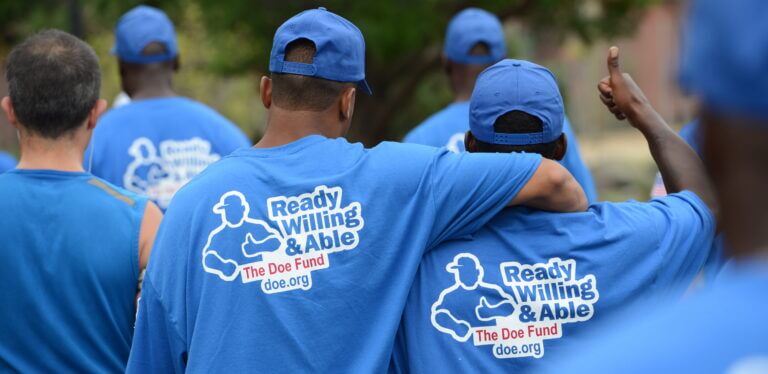
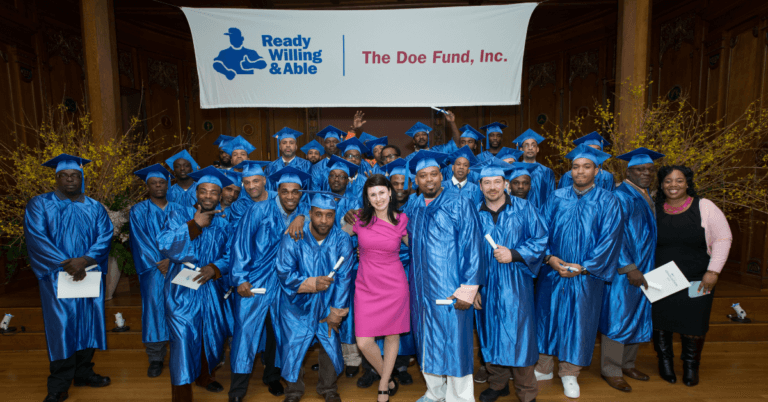
It’s also why programs like Ready, Willing & Able are so critical. While the wheels of legislative change slowly turn and move our state towards real social justice, racial justice, and economic justice, we as a society are dependent on programs like Ready, Willing & Able to serve people in the immediate—to provide, today and every day, a path home and the resources an individual needs not just to survive parole, but to thrive as returning citizens.
We can never lose sight of that in the ongoing fight for a safer, fairer criminal justice system. The tangle of criminal codes, court procedures, and parole regulations aren’t abstract principles up for debate; they’re outcomes of a system that targets Black and brown New Yorkers, poor New Yorkers, and New Yorkers with mental health needs for incarceration, leaving a trail of destruction in their lives, the lives of their families, and their communities.
Sweeping change will come. The American ideal of true and equal justice is within our grasp. People who have been to prison are filled with potential and capable of extraordinary achievement. Ready, Willing & Able proves it. And now it’s time for the law, especially the laws governing our parole system, to catch up.
—