

Martin Luther King Jr’s Dream of Economic Justice
2020 brought our nation to the brink. Rather than offering respite, the New Year has so far only driven us further. We are still reeling from the recent attack on our democracy when a violent, armed mob stormed the Capitol and disrupted the peaceful transition of power. How can we possibly move forward?
In times of crisis, it is helpful to turn to the words of our national heroes—and none speaks to the promise America offers as wisely as Dr. Martin Luther King, Jr.
Dr. King believed in hard work as the foundation of America’s promise, that core to our national ethos is the opportunity for social mobility through labor. “No work is insignificant,” he said in Strength to Love. “All labor that uplifts humanity has dignity and importance and should be undertaken with painstaking excellence.”
In The Three Dimensions of a Complete Life, Dr. King went further: “[W]e must see the dignity of all labor … Even if it falls your lot to be a street sweeper, go on out and sweep streets like Michelangelo painted pictures; sweep streets like Handel and Beethoven composed music; sweep streets like Shakespeare wrote poetry; sweep streets so well that all the host of Heaven and earth will have to pause and say, ‘Here lived a great street sweeper who swept his job well.’”
But with this belief came a significant caveat: if the promise of opportunity is central to the American Dream, why were so many hard-working Americans, especially but not exclusively people of color, trapped in poverty? It is worth noting, of course, that Dr. King was organizing the Poor People’s Campaign—a mulitracial coalition of the working poor demanding fundamental human rights, economic rights, and the alleviation of poverty—when he was assassinated.
Although Dr. King is well-remembered as a champion of racial justice, he is less remembered for his unwavering call for economic justice. The former fits neatly into the American premise of overcoming good in the face of evil, that “the arc of the moral universe is long but it bends toward justice,” in Dr. King’s words. The latter addresses uneasy questions at the very heart of American society, questions we have spent decades trying to avoid.
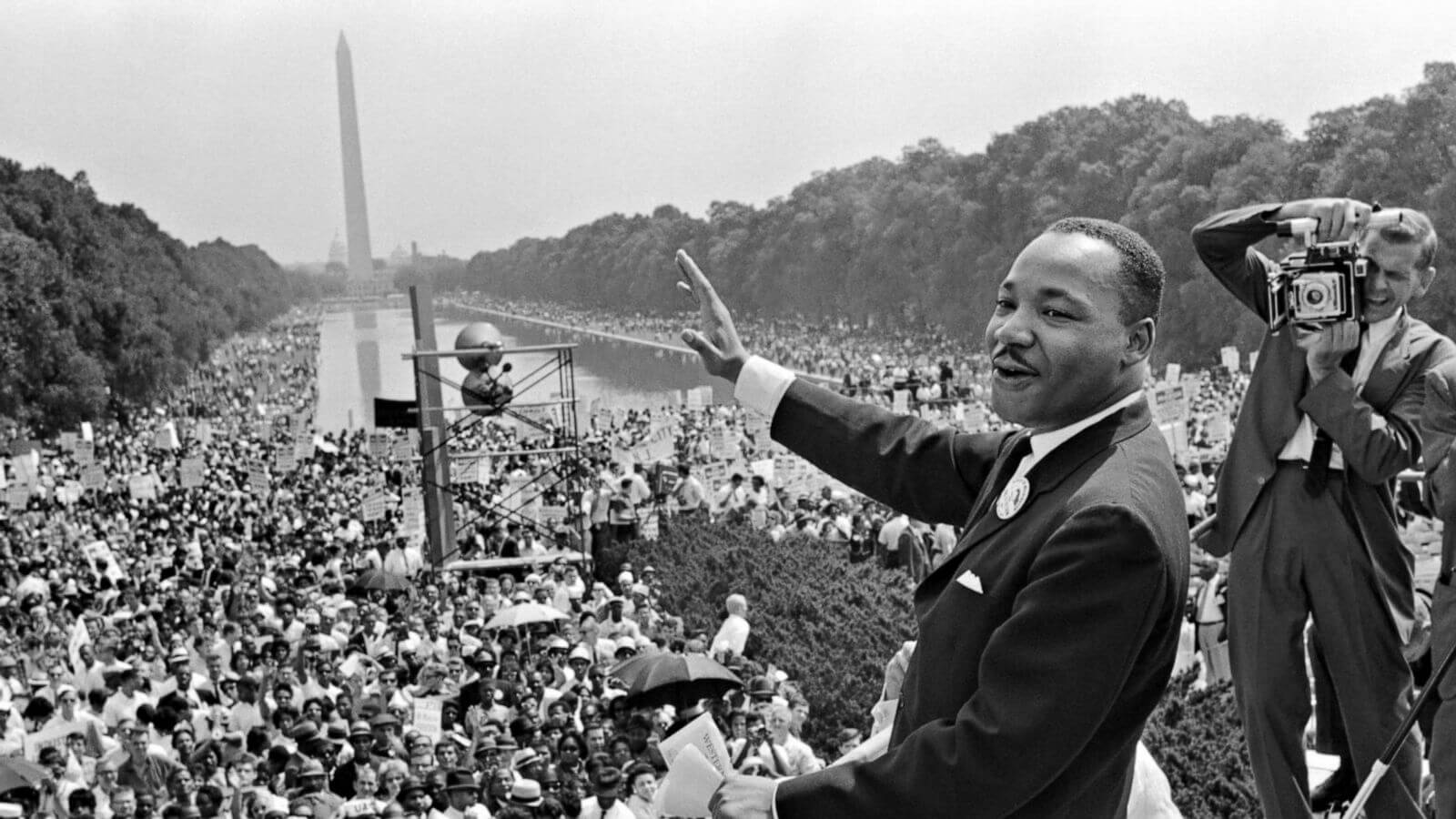
We all know of the climactic words ending Dr. King’s “I Have a Dream” speech. But in that same speech, he also said, “One hundred years later, the Negro lives on a lonely island of poverty in the midst of a vast ocean of material prosperity… In a sense we’ve come to our nation’s capital to cash a check… that will give us upon demand the riches of freedom and the security of justice.”
In the over 50 years since, countless Black Americans remain marooned on that island of poverty amidst America’s vast ocean of material prosperity. The systemic barriers are simply too great: “The choices made in the United States include keeping the low-wage sector quiet by mass incarceration, housing segregation and disenfranchisement,” argues MIT economist Peter Temin.
We see this play out in our work every day. People of color and those with histories of incarceration are far more likely to experience homelessness. In 2018, the Prison Policy Initiative reported that individuals with histories of incarceration are 10 times more likely to be homeless than the general public, and consequently are more likely to be re-incarcerated. Black Americans make up 13% of the general population, but 40% of the homeless population and 40% of the prison population. The men we serve face intergenerational poverty, limited educational attainment, deficits in their work skills and experience, systemic aftereffects of the crack epidemic and disastrous war on drugs, and steep barriers to housing and employment due to their backgrounds.
Meanwhile, America’s economy has become less friendly to the working class since Ready, Willing & Able began, to the point where a minimum wage job alone can no longer help people escape poverty and homelessness. The federal minimum wage has not changed in over a decade, and it has not kept up with cost of living expenses in more than half a century. Since the federal minimum wage was last increased in 2009, the monthly median rent for an unfurnished apartment has increased 49%. Even in New York, where minimum wage is nearly double the federal level, it only covers 76% of median cost of living expenses: “The meaningfulness of the working-class life seems to have evaporated,” says Nobel Prize-winning economist Angus Deaton. “The economy just seems to have stopped delivering for these people.”
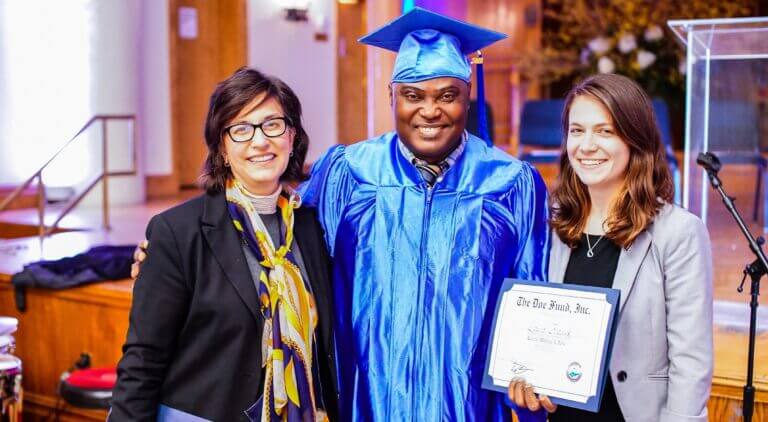
Here at The Doe Fund, we share the same beliefs as Dr. King: both that labor uplifts, and also that much more needs to be done so it can uplift all Americans equally. In the words of Dr. King, “It’s all right to tell a man to lift themselves by their own bootstraps, but it is a cruel jest to say to a bootless man that he ought to lift himself by his own bootstraps.”
That is why in recent years, our employment programs have evolved to ensure the men we serve not only place their foot on the first rung of the economic ladder, but steadily ascend. We have intentionally refocused our efforts on preparing and placing men in career-oriented jobs with higher wages and growth potential—particularly in skilled trades facing dire shortages such as welding and carpentry. These enhanced career programs go hand-in-hand with exciting new social enterprises, such as the Mobile Market providing emergency food deliveries to underserved communities.
In the 30 years since The Doe Fund began, we have helped over 28,000 people off the streets and up the economic ladder. Black Americans make up over 81% of Ready, Willing & Able participants, and we are proud to have given these courageous men the skills and opportunity to break free of addiction, poverty, homelessness, and recidivism. As we look to the future, we are eager to scale our model as a national solution to the economic injustice Dr. King decried so many years ago.
There are no easy fixes to make our society more equitable. But we must keep our focus on providing financial opportunity to those who for so long have been shut out of our mainstream economy. If America is to fulfill its promise as the land of opportunity, it must provide that opportunity to all of its citizens.