

Mock Interview Volunteers Speak Out on Juneteenth
As we celebrate how far we’ve come since the emancipation of enslaved people this Juneteenth, we must also recognize how much more work still needs to be done.
The Doe Fund moves this work forward every day by addressing the most visible consequences of racism and injustice in America: homelessness and incarceration. Our on-the-ground services provide people who have been excluded from mainstream society—disproportionately people of color—with the opportunity to reenter, and to avoid returning to the criminal justice system.
Corporate partners are essential to us continuing this work. We are particularly grateful for the Sony Global Social Justice Fund, which “supports initiatives that promote social justice, anti-racism initiatives and [efforts] to foster diversity, equity and inclusion both inside and outside of the company around the world.”
Recently, Sony staff members volunteered to participate in virtual mock interviews with Ready, Willing & Able trainees as they begin their own job searches, armed with the skills and experience they’ve gained through the program. We spoke with two volunteers about their experience: Ochi Nwokoro, Talent Acquisition Coordinator for Sony Music; and Towalame Austin, Executive Vice President, Philanthropy and Social Impact, Sony Music Entertainment.
What inspired you to volunteer with The Doe Fund?
Ochi Nwokoro (ON): I think the thought of helping others with the job search (which can be daunting) was what inspired me to volunteer with The Doe Fund. There’s so much that I didn’t know going into my own personal job search that can be valuable information for others. I think The Doe Fund’s work is vital to leveling the playing field by making things like decorum during an interview and research on the company common knowledge. We can all help one another create opportunities for advancement and personal growth.
Towalame Austin (TA): As a new member of Sony Music Group’s senior executive team, I’ve received extensive insight into what truly drives our organization. Philanthropy is truly at the forefront of Sony’s priorities. We saw this exemplified last year when Sony committed $100 million through our Global Social Justice Fund which aims to support social justice and anti-racist initiatives around the world. Criminal justice reform is one of our priority areas, therefore, when I was asked to volunteer, I wanted to do my part and get involved with an important cause.
Tell us about the experience conducting mock interviews with the Men in Blue.
ON: It was interesting for me because I’m normally on the other side of the table, being interviewed by someone older than I am. I think that the difference in age was great, because it will prepare the Men in Blue for similar situations when they might be interviewed by someone younger than them.
The trainees were well-prepared, and I could tell they put their best foot forward. It was an awesome experience, and I’d like to do it again.
TA: I was so encouraged by the hope that the men we spoke with had. The events that we all witnessed unfold last year were devastating, chilling, and discouraging at times. So to see a group of individuals who are motivated to get back to everyday life, something we all tend to take for granted, was inspiring.
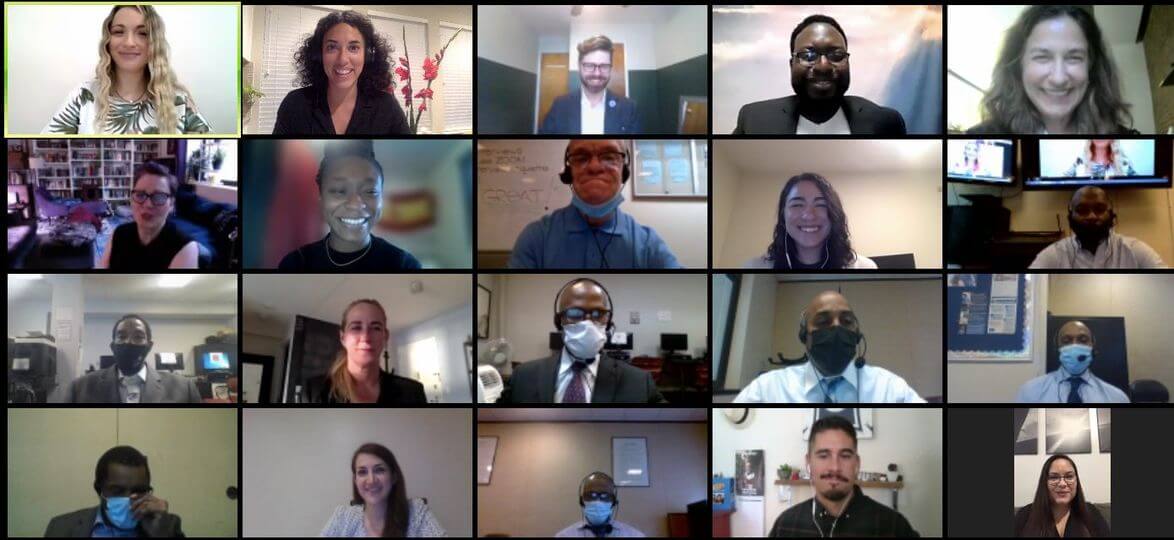
What is it like working with our trainees remotely? What challenges and opportunities did it present?
TA: Working remotely, in general, has presented multiple challenges in almost every space. The technological challenges of joining a Zoom call alone can be trying. However, by engaging in this virtual event, I was able to connect with individuals that I typically wouldn’t have from Los Angeles. Events like these have put the pandemic in perspective and forced me to acknowledge the positives. Two years ago, an event like this would have required travel, extensive coordination, and scheduling. But now, I can engage with the trainees without even leaving my home.
What is the biggest piece of advice you have for Ready, Willing & Able participants?
ON: Ask as many questions and absorb as much as you can. I learned through trial and error on my career path, but I succeeded most when I asked questions beforehand. It’s really helpful to get as much information as you can so that you can use what you’ve learned to further yourself and navigate different situations. Making informed decisions is a great advantage.
TA: Being raised in Los Angeles, I like to draw inspiration from the late Kobe Bryant. One of my favorite Kobe quotes is, “Once you know what failure feels like, determination chases success.” In life, we all experience setbacks but what defines us is how we move forward and how badly we’re willing to work.
Even though we’re over the worst of the pandemic, many of the changes in the workforce will be long lasting. What do you think of their job readiness for the “new normal?”
ON: I think the “new normal” is predicated on privilege of Internet access and training that comes from being ingratiated into an organization before the global pandemic. Some folks don’t have this kind of advantage because of their circumstances going into the pandemic. That said, I think the Doe Fund has taken great care in preparing the Men in Blue and they will be able to go into job searches using tactics and awareness that will give them opportunities to gain employment.
The landscape of the workforce has reached a place in which employees and candidates alike can bargain with more leverage. The Doe Fund’s work makes it possible for these men to go into the workforce with indispensable skills, including negotiation.
What role do you hope the Men in Blue will play in rebuilding efforts as we lead an inclusive recovery from the pandemic?
TA: As we continue conversations about Social Justice and Diversity and Inclusion, I hope that organizations such as Sony will increase the work that has been created throughout the past year. When we talk about inclusion, I am inspired to see individuals such as the Men in Blue being invited to the table that they were historically excluded from. I hope these men will share their stories and advocate for individuals who have been impacted by the justice system and reverse the cycle that is long overdue for transformation. With that, I’m thankful for partnerships with organizations such as The Doe Fund that I believe are truly doing the work. Ten years from now, I’ll be proud to look back at the change that was created and know I played a small role in making that happen.