

The Coordinates of Home: Reflections from the 2025 Mama Doe Memorial
By R. Antonio Matta
R. Antonio Matta is an actor, author, and longtime tenant of our Webster Green supportive housing residence. His podcast, Recovery Dialogues & Sober Stories, features candid discussions on recovery, resilience, and hope.

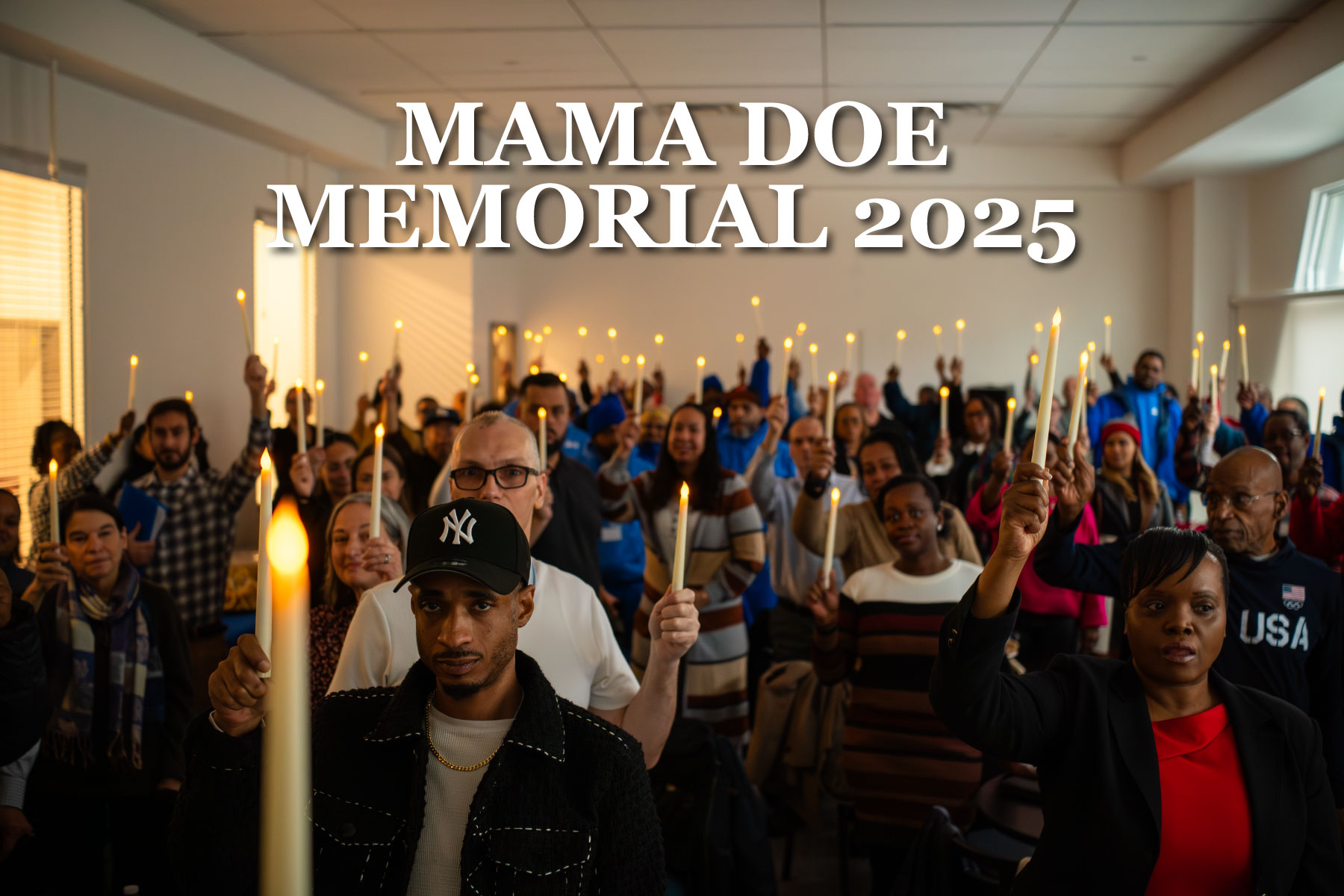
Webster Green sits in the Norwood section of the Bronx, where the Grand Concourse exhales into residential quiet. On December 17th, I stepped into a widened classroom — space made for people, food, cushioned chairs, and an aura of something rare: human love made visible. The air felt like a vigil — friendly, yes, but weighted. We were here to honor the dead and recommit to the living.
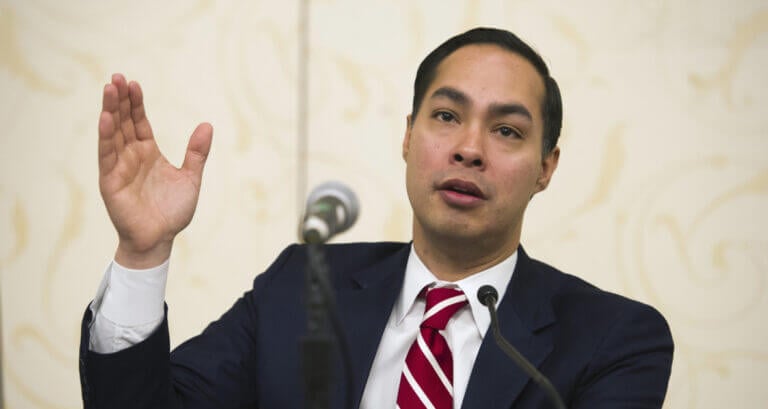
Jennifer Mitchell, The Doe Fund’s President & CEO — who has attended nearly every Mama Doe Memorial since 2001 — set the tone. She opened with phrases that landed like coordinates on a map I’m still learning to read: brighter future; being seen, heard, valued; the journey from homelessness to employment to stability and recovery. Then she said the line that pinned me to my chair: “No one is defined by their hardest moments.”
I’ve spent years tracing the topography of that sentence. Over three years chronically homeless — maybe five or six; trauma smudges the borders. In and out of shelters that felt like medium-security — safety a rumor, privacy a luxury. Then a car hit me. Blunt-force trauma to the skull. Wheelchair, then crutches, then a cane, then standing. I spent my 35th birthday in a rehab center, then returned to shelters because recovery doesn’t care for straight lines.
Then John McDonald stood up — Executive Vice President of Real Estate at The Doe Fund — and told the origin story I’d never heard. Forty years ago, his father gave a scarf to a woman the people in Grand Central called Mama Doe. She mothered those with nowhere to go. One winter, police displaced her into the cold, and she died on a bench, wrapped in that scarf. A year later, John’s father founded The Doe Fund. One woman’s death. Tens of thousands of lives redirected. Mine among them.
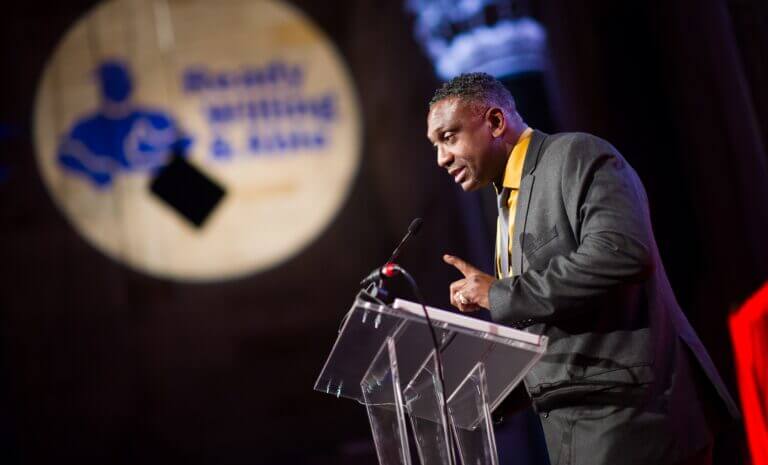
Next came Dalvin — a trainee in RWA@Home, the initiative to help people in supportive housing find work and fuller lives. Dalvin’s story mirrored mine where it mattered: migration from the South to the city, dreams deferred but not surrendered. His voice caught as he spoke about how precious life is, how virulent circumstances can be, and how powerful our choices remain in the storm. Then he gave us the line that hung in the air after the applause: “I can actually breathe.” We rose. Jennifer returned to the podium with what we needed to hear: We’re in this together. Change is possible.
Then the candles. We held them in a silence that felt like listening—backward to those who can’t speak anymore, forward to the work still ahead.