

Black History Month: Lifting As We Climb
This guest post was contributed to The Doe Fund’s blog by the Harlem Historical Society in celebration of Black History Month.
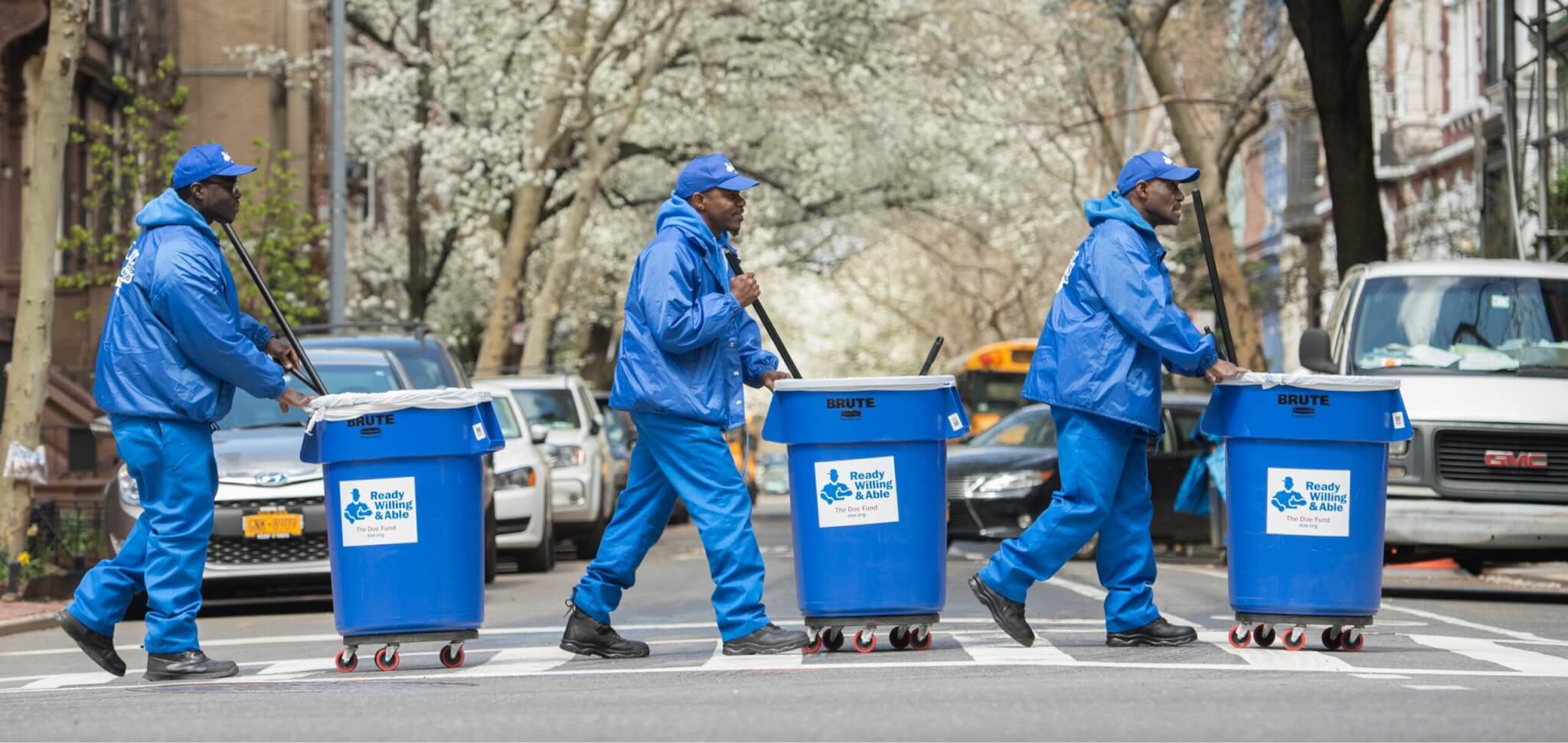
Violence in our community is not inevitable. To say that violence spreads like a disease is not a metaphor—it is what the science now shows. Violence meets the dictionary definition of a disease, and hundreds of studies now confirm that violence is contagious. The Doe Fund does its part by breaking the devastating cycles of homelessness, incarceration, and criminal recidivism. We have tremendous respect for this work.
To honor Black and Women’s History months, it would be an injustice to remain silent about the African American leaders who laid the path that we are still striving to follow.
During the 18th Century, about a third of Brooklyn was enslaved. The City of Brooklyn had one of the highest rates of enslavement in the country, and after hundreds of years, the institution of slavery was finally abolished in New York State in 1827. Very soon, legislators found new ways to disenfranchise African-Americans.
The breakthrough came in 1838 with the founding of Weeksville, the largest Free Black community in the United States. Sylvanus Smith and his partners intentionally created a community where residents would have access to education, economic self-sufficiency, and political self-determination. Sylvanus Smith created a community where African American men could meet the property requirements to vote. His daughter, Sarah Smith Garnet, started the first club supporting Black women’s suffrage, and she was the first Black woman principal in New York. Sarah’s sister Dr. Susan Smith McKinney was her class valedictorian in 1869 and went on to become the first Black woman doctor in New York, Dr. McKinney.
She also served as an official physician at the Brooklyn Home for Aged Colored People, one of the first medical institutions in Weeksville. She was also one of the founders of the Homeopathic Hospital, staffed entirely by women. Dr. McKinney Steward was most known for her ability to treat malnutrition in children. Her skill along with her gentle nature made her a very popular and prosperous family physician. She treated both white and black families at her office at 205 DeKalb Avenue.
What is stunning is that the very first Black woman to become a doctor was so concerned with helping at-risk youth, as they might be called today. These women were close with W.E.B. Du Bois and Ida B. Wells and laid the groundwork for Reverend Dr. Martin Luther King, Jr.
Writing on MLK Day 2021, The Doe Fund wrote, “we must keep our focus on providing financial opportunity to those who for so long have been shut out of our mainstream economy. If America is to fulfill its promise as the land of opportunity, it must provide that opportunity to all of its citizens.”
These are important words. And we want to make sure the world knows that in our neighborhood, the African American community respected educational excellence, and the churches were essential to the literary, social, political and spiritual uplift of the community.
Our prayer is that in 2021 we can live up to the phrase “Lifting As We Climb.” That was the motto of the National Association of Colored Women when they were founded in 1896. It still IS their motto, because they remain leaders to this day. We believe we can climb higher by recognizing the contributions of those who came before us. We can build on their ideas and institutions they created together.