


Success Stories: Moving from Surviving to Thriving
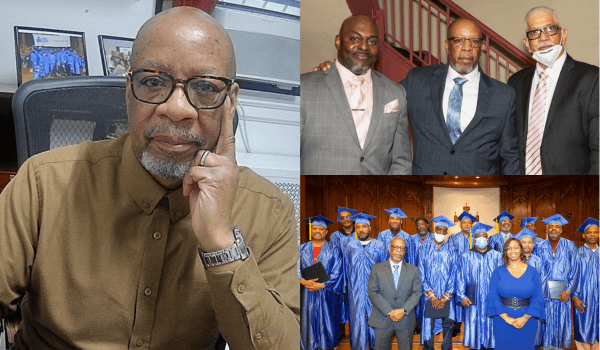
This guest post was contributed to The Doe Fund’s blog by Justin Smith in celebration of Black History Month.
When we talk about homelessness, we often talk about its causes: lack of employment, opportunity, and housing; experiences with addiction, incarceration, or mental illness.
One thing missing from the conversation is a characteristic that all people experience homelessness possess: survival. It’s also one ingrained deep in the psyche of Black America. After all, we are policed—and often, unfortunately, much worse—for simply existing “while Black.”
But what happens to a person when they are just surviving, rather than living? I often compare my experience with homelessness to hoarding; instead of physical possessions, I hoarded survival skills. Some were helpful, of course, but others simply got in the way of recovery. Chief among them compartmentalizing and suppressing painful memories, both from my past and of my seemingly-hopeless day-to-day reality.
When I experienced homelessness, I became so exhausted from surviving. Pushing down my feelings left me an empty shell. I didn’t want to just survive; I wanted to live. I wanted the tools to thrive: acknowledgment, validation, accountability, and opportunity. The vast majority of others who are experiencing homelessness want the same.
The most effective racial justice solutions are those that will move people from a place of surviving to living to thriving. In other words, policies that provide systemic quality-of-life improvements, such as investing in underserved schools and communities, expanding healthcare access, raising the minimum wage to meet the living wage, providing employment opportunities and career training programs, building low income housing, and funding reentry services that bring people back from the margins. These solutions operate from the base assumption that all bodies possess inherent dignity worth acknowledging, validating, and holding accountable—not just individuals deemed “exceptional” or worthy of charity (often by white people who have limited experience with lower socioeconomic backgrounds).
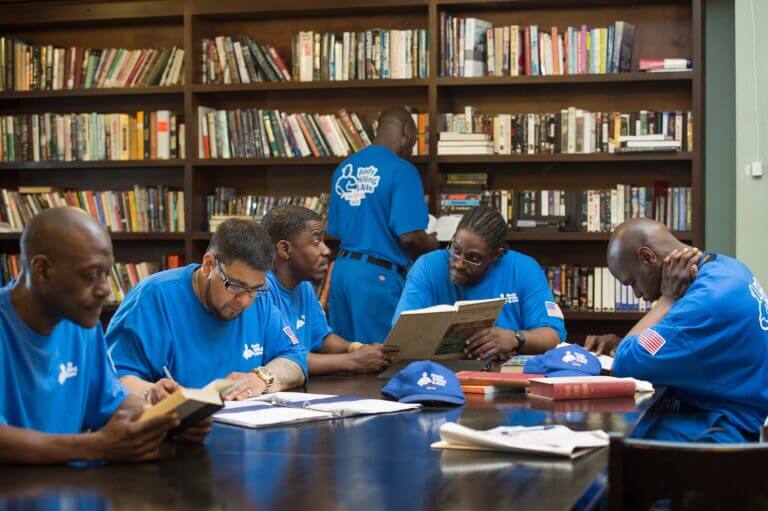
So why isn’t homelessness being talked about the same way? By combining paid work, career training, housing, and supportive services, The Doe Fund provides a holistic spectrum of care that brings the whole self from a place of surviving to thriving. Thanks to this model, I was able to unpack all the painful memories I buried while in “survival mode” and begin to truly heal. It was only after I unlearned these habits and let go of those feelings that I realized how much they were hindering my growth. Suddenly, it seemed as though there was no limit to what I could accomplish.
Success comes in many forms. For me, it’s having the ability pay it forward with my new tutoring and mentoring organization, Youth Enrichment Academy. In addition, I’m in the final stages of forming a small Private Equity Company, while also pursuing my Associates Degree in Mental Health and Human Service at Kingsborough Community College.
All this happened because I became part of a program where people acknowledged me, validated me, held me accountable, and provided me with opportunity. A program where people were personally invested not just in my individual success, but in providing a systemic solution to the countless others walking in my footsteps.