

Moving Forward After a Year of Injustice
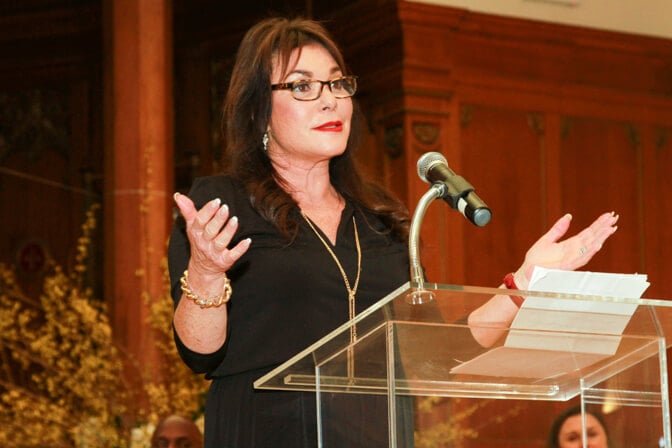
Harriet McDonald is the President of The Doe Fund and Co-Founder of Ready, Willing & Able.
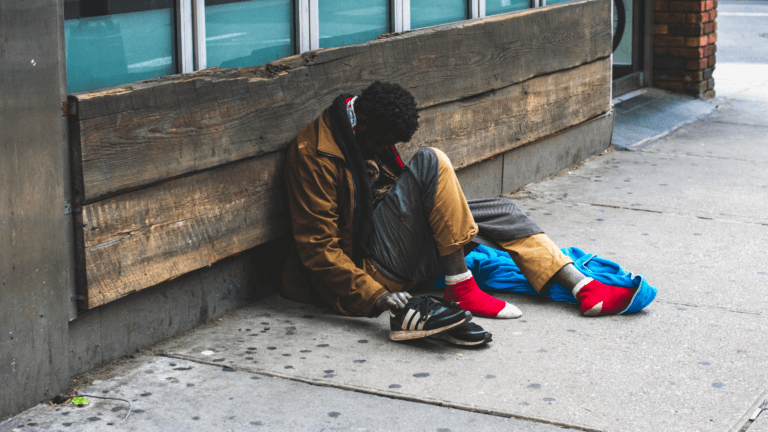
It has become a cliche to call the pandemic “unprecedented” and 2020 the most challenging year America has faced in decades. Unemployment reached the highest levels we’ve seen since the Great Depression, and homelessness is expected to rise by 40% as a result.
COVID-19 has been devastating—disproportionately so for people of color, low wage workers, and those who have experienced homelessness and incarceration.
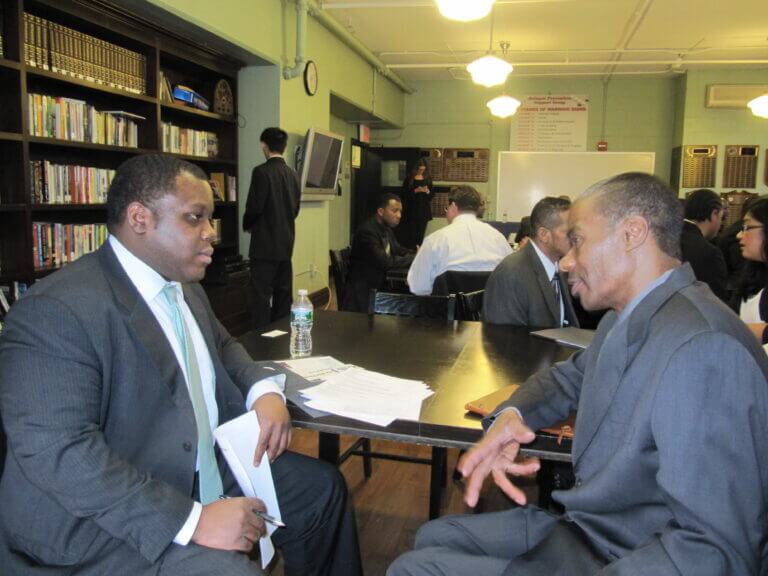
These appalling disparities reveal themselves in my work every day. Recently, I ran into a Ready, Willing & Able trainee at one of our transitional residences. Though only about 40, his face carried a weariness, perhaps from being cast aside by a society that views him as invisible and expendable.
Our conversation was as unforgettable as it was heartbreaking. He told me, voice cracking with emotion, that the program was “the best opportunity I’ve gotten in my whole life.” I was moved by his gratitude, but also outraged.
It is unconscionable that the “best opportunity” this man has received was at a homeless shelter. It shouldn’t be the case in America that the greatest chance a Black man gets to escape poverty is through social service programs that intervene after he has lost everything, after he has battled addiction, homelessness, and an unjust criminal justice system. If the United States is to truly fulfill its promise as the land of opportunity, that opportunity must be available to all.
To do so, America must end mass incarceration, which disproportionately impacts the poor and people of color but does not reduce crime. At nearly 25% of the world’s incarcerated population, the United States imprisons its citizens more than any other country—from 200,000 in 1972 to 2.2 million today. Mass incarceration also costs taxpayers $87 billion yearly, a 1000% increase from 1975. Significant race and wealth disparities exist at every level of our current criminal justice system.
Even further, our country must dismantle its school-to-prison pipeline by investing resources into low income communities that have been segregated by design and deliberately disenfranchised. The best way to reduce homelessness and incarceration is to prevent it from happening in the first place.
Employment is also essential to the solution. Legislators should expand fair-chance hiring laws and enact community hiring plans. Government incentives should reward businesses for hiring qualified job applicants who have been homeless or incarcerated, while corporate leaders must destigmatize hiring and cultivating them as employees.
The fact is, these individuals are rarely given the chance they’ve earned, despite their qualifications. Research from The Brennan Center for Justice found that people who have been incarcerated experience average earnings losses of 51.7%; the lost earnings of Americans impacted by conviction or imprisonment total $372.3 billion annually.
In addition, the United States should raise its federal minimum wage, which has not increased since 2009 and has not kept up with cost of living expenses in more than 50 years. Homeless and formerly incarcerated Americans who can find work are too often consigned to low income jobs because of hiring discrimination, lack of education, and other aspects of their backgrounds. This exclusion from all but the bottom rung of the mainstream economy forces many into the cycle of recidivism; within three years of release, two out of three people are rearrested and more than 50% are incarcerated again.
Living wages would lift them out of abject poverty, so they have a greater chance of ascending the economic ladder. And as case studies in states with increased minimum wages prove, implementing them will not result in the economic devastation that was assumed as dogma 30 years ago.
On top of all this, formerly incarcerated people experience widespread housing discrimination (Bankrate has provided us with helpful resources to help formerly incarcerated people secure housing). The Doe Fund supports legislation to prevent housing discrimination on the basis of arrest or criminal record by banning background checks. People who have been incarcerated once are seven times more likely than the general public to become homeless, and people who have been incarcerated more than once are 13 times more likely. Meanwhile, people experiencing unsheltered homelessness are more than twice as likely to have contact with the justice system than those living in shelters, and are nine times more likely to have spent at least one night in jail during the past six months.
Our nation’s economy is much different today than when my husband George and I began this work in 1990. At The Doe Fund, we know that upward mobility has become much more difficult to achieve. Over the past two years, we have made major investments in our Workforce Development programming to prepare men for skilled trades that offer higher wages, comprehensive benefits, and union membership. Our graduates must be able to provide for themselves and their children so we can truly end intergenerational poverty.
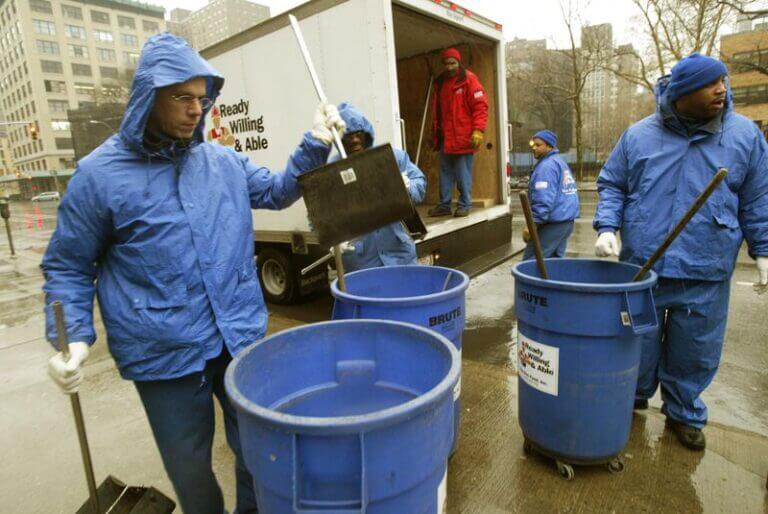
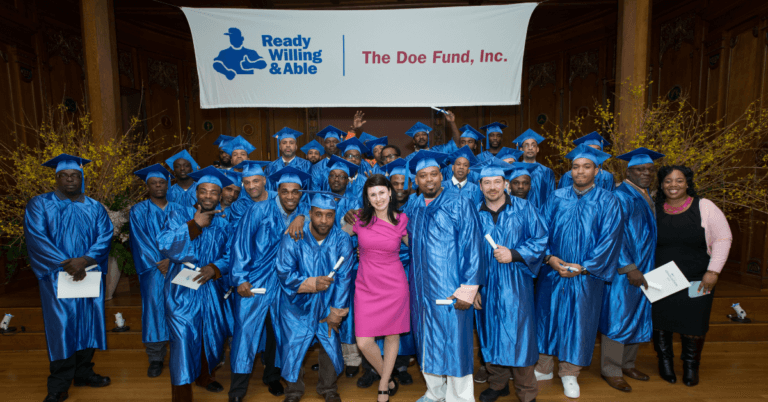
After more than 30 years and 28,000 success stories, Ready, Willing & Able is a national model. Program graduates are 62% less likely to recidivate, and 82% of graduates maintain their employment. We have proven not just that Work Works, but that the only difference between those who succeed and those who don’t is opportunity. The same opportunity that has been denied to people of color in this country for generations.
We must bring the Work Works model across our nation because there can be no racial justice without economic justice. And today in America, there is neither.