

- Do all trainees live with you?
No. While RWA was founded as a
holistic program combining paid work with transitional housing and social services for formerly homeless
individuals, we have responded to the national crisis of criminal recidivism and have adapted RWA to
meet the needs of individuals re-entering society after incarceration.
We offer RWA-Residential for formerly homeless individuals in need of housing, and RWA-Day
for individuals under parole supervision who have housing but can benefit from transitional employment and
social services as they stabilize and integrate back into their communities.
- What does an RWA trainee experience from start to finish?
The
RWA-Residential program is 9 to 12 months and the RWA-Day program is 6 to 9 months
— from intake to graduation — with on-going, lifetime graduate services thereafter. While the
core of the RWA
program is full-time paid transitional work, as well as the maintenance of sobriety, we offer a number of
additional services and resources throughout a trainee's experience. Please review our
"trainee roadmap" that graphically describes the flow
of RWA from day 1 to graduation and beyond.
- Do all trainees start RWA at the same time?
No. We offer rolling
admission, meaning that at any given time, trainees living in a particular facility (or in
the RWA-Day program) will be at various stages of the program. For example, some trainees will
be participating in program orientation, some will be working in a Doe Fund venture, and some will moving on to
independent housing all at the exact same time.
We hold one graduation celebration per year in each city in which we
operate for all individuals who reach and maintain graduate status in that year.
- When does a trainee graduate?
A trainee will graduate when he obtains and can verify full-time, permanent employment, independent housing
and lasting sobriety. In order to achieve Diamond graduate status and be recognized in our annual
graduation, he or she must participate
in Graduate Services
by providing monthly proof of employment and housing, in addition to a clean drug test.
- How do you recruit program participants?
RWA is a model for providing a successful path for formerly homeless and formerly incarcerated
individuals to re-enter society and achieve self-sufficiency. After nearly 20 years of results, RWA
has earned a reputation among government, service providers and communities as a pragmatic, yet
compassionate, program that offers a "hand up" rather than a "hand out." Many individuals seek
our services after hearing about RWA in shelters, prisons or on the street. In the cities where
we operate we receive referrals from government agencies working with homeless and formerly incarcerated individuals.
- Who is eligible for the RWA program?
For all RWA-Residential programs, applicants are eligible if they are:
- Homeless;
- Physically and mentally able to work 35 hours/week;
- Committed to living drug and alcohol free and being randomly drug tested twice weekly; and
- If on welfare, willing to give it up.
For all RWA-Day programs, applicants are eligible if they are:
- On parole or probation;
- Physically and mentally able to work 35 hours/week;
- Committed to living drug and alcohol free and being randomly drug tested twice weekly; and
- If on welfare, willing to give it up.
- How much do trainees get paid?
Currently, $7.40 per hour (above New York, New Jersey and Pennsylvania minimum wage) for the first
210 days of work in a Doe Fund venture, and $8.15 per hour for the remainder of the program. We pay
weekly and require trainees to save a portion of their earnings.
- Do trainees pay rent?
Yes. To mirror real life, all residential trainees pay a modest room and board fee of $105 per
week. This includes three nutritious meals per day and access to community rooms, libraries,
computer labs, and gardens in all facilities. We also have a mandatory saving program to help
trainees save for future expenses associated with the transition to permanent housing.
- How many individuals do you serve?
Our RWA-Residential program is tied to the number of transitional housing beds we have in our
facilities. In New York City, this number is currently 600; in Philadelphia, 70. The RWA-Day capacity is limited only by available
funding. Currently we have 45 slots in New York City.
- Do you only serve men?
No. While we only house men in RWA transitional housing, the RWA-Day program is open to women.
- What is your success rate?
The Doe Fund holds itself to the highest standard. To graduate from RWA trainees must not only
achieve the triple crown of employment, housing and sobriety, they must keep in touch to repeatedly
confirm their success. Our current success rate is 50%.
- Where are your facilities?
New York City, NY: Harlem, Bedford-Stuyvesant, and East Williamsburg
Philadelphia, PA
For more information, please see
our facilities page.
- How are you funded?
We are funded through a variety of public and private sources. In fiscal year 2007, while The Doe Fund
successfully raised 42% of our $42 million operating budget through donations and grants, we earned the
majority of our revenues through contracts, rent from our housing programs, and our
social purpose ventures. For
more detail on our revenues and expenses, please see
our financial information page.
- How do you decide what kind of social purpose venture to run?
The Doe Fund currently operates 5 business ventures. The
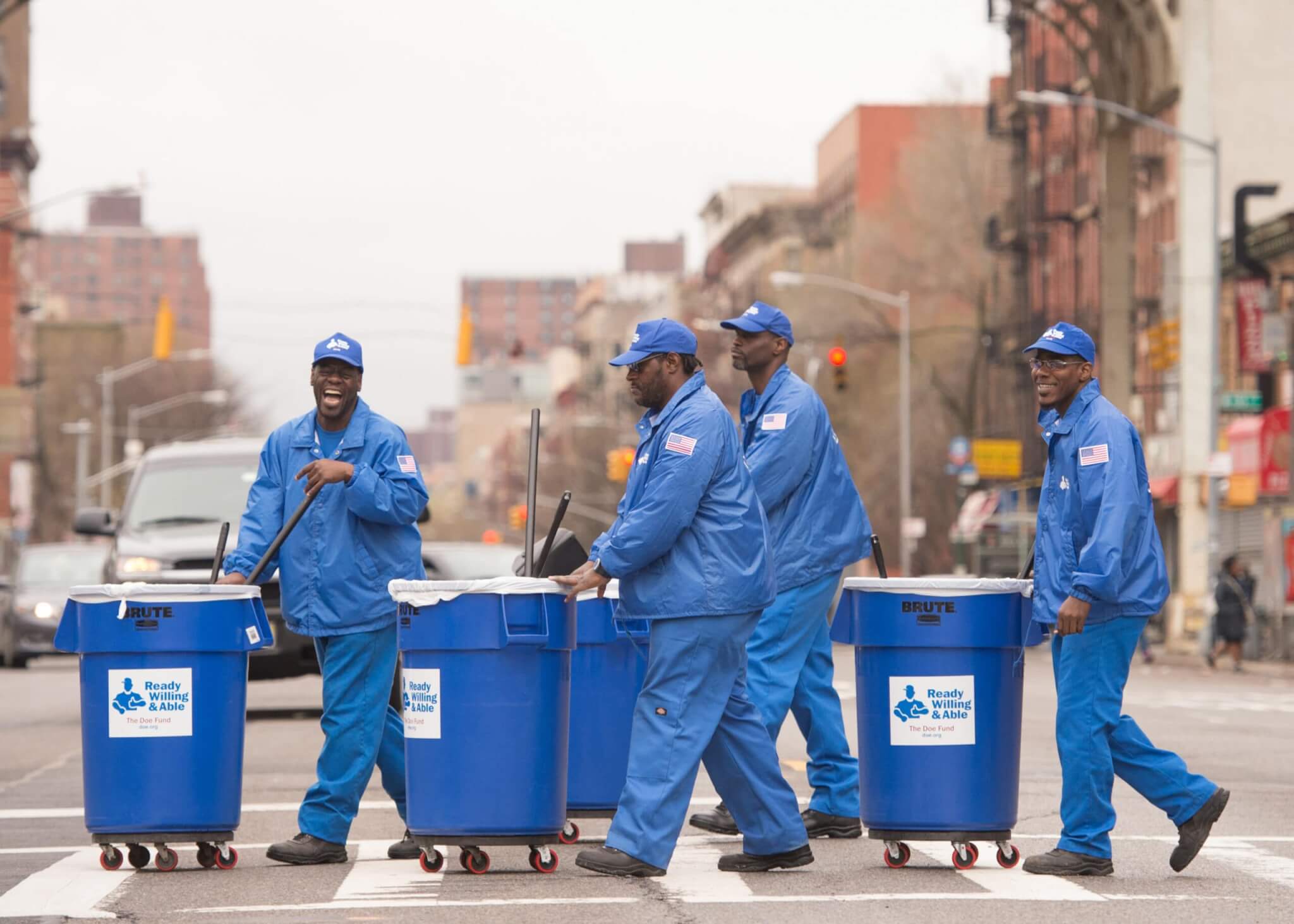
Community Improvement Project provides supplemental street sanitation
services; Pest @ Rest trains participants in integrated
pest management; Back Office of New York is
a full-service direct mail house; RWA Resource Recovery
collects waste cooking oil from NYC restaurants for conversion into biodiesel fuel; and
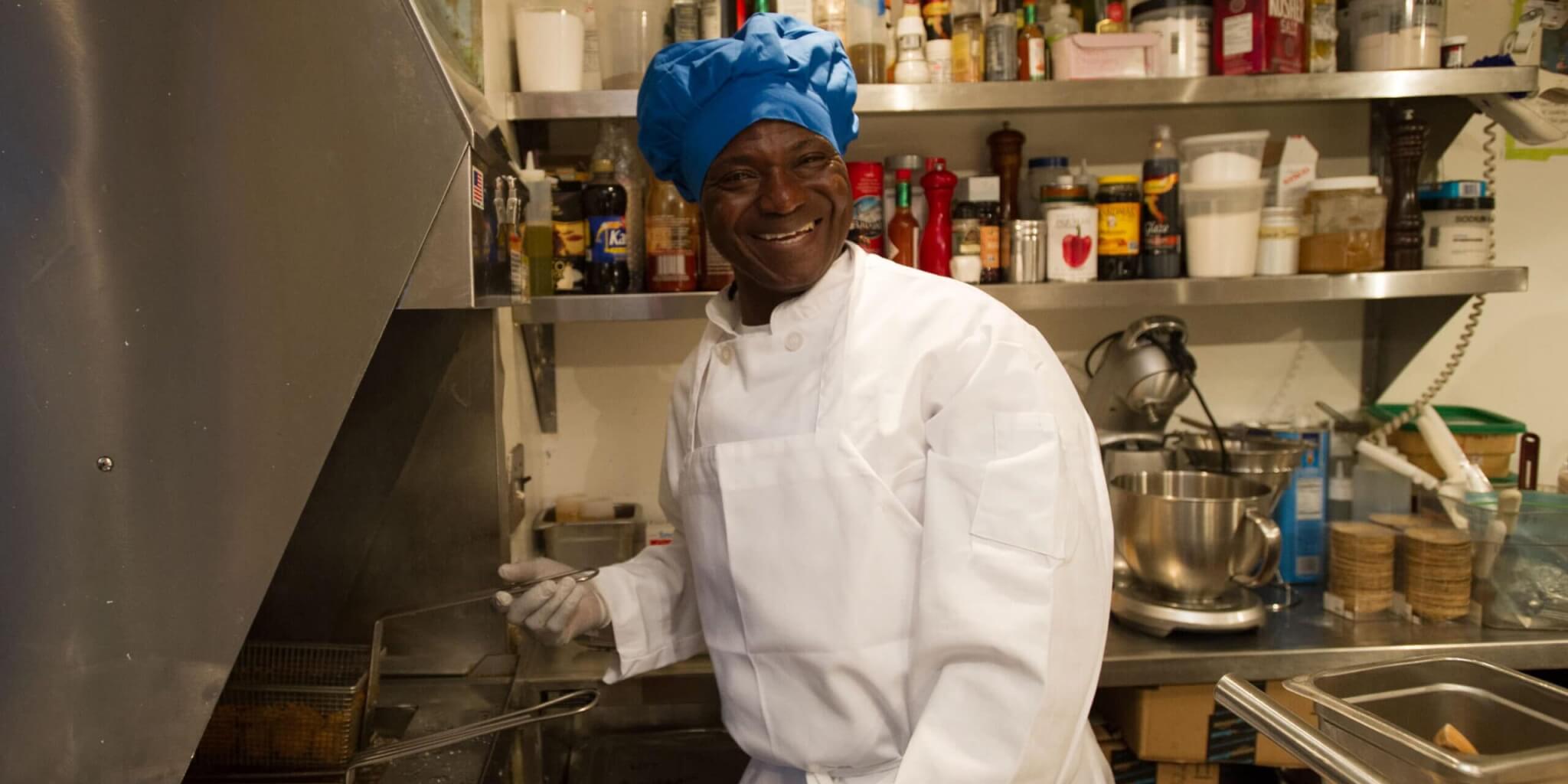
Culinary Arts prepares participants for careers in the food service industry. In
every case, a successful The Doe Fund venture has met three criteria — job creation and training appropriate
for the skills and interests of RWA trainees; a competitive, market-oriented business model
fulfilling customer demand; and the generation of revenue sufficient to cover the cost of both business and training.
- Are you interested in expanding to other cities?
The Oak Foundation awarded The Doe Fund a generous grant to conduct research and evaluation of key cities
in which to replicate. By 2012, The Doe Fund plans to have a presence in two more municipalities.
- Is RWA the only program The Doe Fund operates?
No. The Doe Fund also
runs permanent and
transitional housing programs for low-income individuals as well as for people living with AIDS.